



Dentures in Cleveland & Redlands

Dentures

What are Dentures?

Dentures, often referred to as dental prosthetics, are custom-made replacements for missing teeth and surrounding tissues.  Custom-made to fit each patient’s mouth, they restore the appearance of a full smile while also recovering many of the everyday functions that tooth loss can make difficult. Whether partial or full, dentures play a vital role in restoring smiles and enabling individuals to embrace life with comfort.
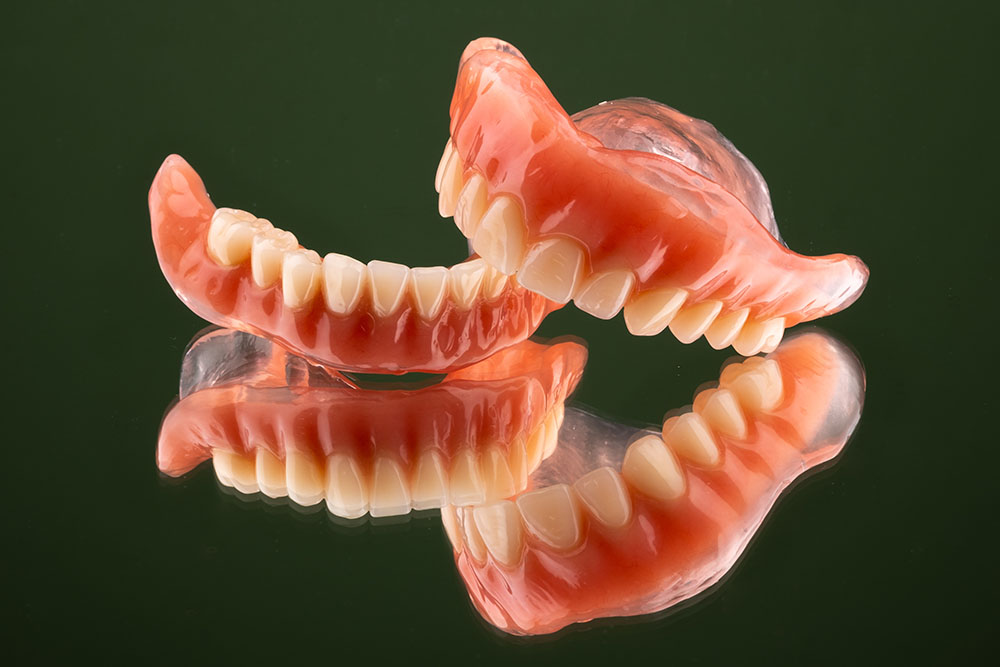
dentures in cleveland
dentures redlands

Benefits of Dentures

Dentures remain one of the most widely used tooth replacement solutions for good reason. For patients who have experienced significant tooth loss, the right set of dentures can make a meaningful difference to daily life — not just in how your smile looks, but in how you feel and function.

  • Restore your ability to eat comfortably. Missing teeth make chewing difficult and often lead people to avoid certain foods altogether. Dentures bring back the ability to eat a wider range of foods, supporting better nutrition and quality of life.

  • Improve your speech. Gaps from missing teeth can affect how certain sounds are formed, causing speech to become unclear or difficult. Dentures fill those gaps and help restore natural speech patterns.

  • Rebuild your confidence. The appearance of a complete smile has a real impact on how people feel about themselves in social and professional situations. Well-fitted dentures look natural and give patients the freedom to smile, laugh, and talk without self-consciousness.

  • Support your facial structure. When teeth are lost, the jawbone underneath gradually shrinks and the facial muscles lose their support — leading to a sunken appearance around the mouth and cheeks. Dentures help maintain the natural contours of the face and prevent this from accelerating.

  • Prevent remaining teeth from shifting. For patients with partial dentures, filling the gaps left by missing teeth stops neighbouring natural teeth from drifting out of position over time — protecting your bite and the integrity of your remaining dentition.

  • A non-surgical option. Dentures provide effective tooth replacement without the need for surgery, making them a suitable choice for patients who are not candidates for implants or who prefer a less invasive approach.

  • Affordable and accessible. Compared to dental implants, dentures are a more cost-effective solution for replacing multiple teeth — particularly for patients who need a full arch replaced. Many Australian health funds also provide cover for dentures under extras, which can significantly reduce out-of-pocket costs.

  • Custom-made for your mouth. Every set of dentures we make at GWH Dental is crafted specifically for you — shaped and coloured to complement your facial features and match any remaining natural teeth, so the result looks as natural as possible.

Types of Dentures

Not all dentures are the same, and the right option depends on how many teeth you’re replacing, the health of your gums and jawbone, and your long-term goals. At GWH Dental in Cleveland, we’ll discuss your situation thoroughly and recommend the type that best suits your needs.

Full dentures or complete dentures  replace an entire arch of teeth, either upper, lower, or both. They sit directly on the gum ridge and are held in place by a natural suction effect, sometimes supported by a dental adhesive for additional security. Full dentures are typically recommended when all or most of the remaining natural teeth have been lost or need to be extracted. They can be fitted immediately after extractions (immediate dentures) or after the gums have fully healed.

Partial dentures are used when some natural teeth remain and only specific gaps need to be filled. They consist of one or more artificial teeth attached to a gum-coloured base, which connects to your existing teeth via small metal or plastic clasps. As well as restoring the appearance and function of your smile, partial dentures prevent the remaining natural teeth from shifting into the gaps which can affect your bite and overall dental health over time. Partial dentures are removable and can be taken out for cleaning.

For patients who want the stability of dentures without the movement that traditional full dentures can sometimes experience, implant-retained dentures offer a significantly more secure option. Two or more dental implants are placed in the jawbone, and the denture clips onto them — eliminating the need for adhesives and dramatically improving chewing function. Unlike fixed implant restorations, implant-retained dentures can still be removed for cleaning. They’re an excellent middle ground for patients who want greater confidence in their dentures without committing to a fully fixed implant solution.

What to Expect During Your Denture Procedure

Getting dentures is a process that unfolds over several appointments rather than a single visit. Each stage has a clear purpose, and our team at GWH Dental will guide you through what’s happening and why at every step.

Initial Consultation and Assessment Your first appointment is all about understanding your situation. We’ll examine your teeth, gums, and jawbone, taking X-rays where needed to assess the health of your mouth and determine which type of dentures is most appropriate for you. If any remaining teeth need to be removed before dentures can be fitted, we’ll discuss the timing and approach at this stage. We’ll also talk through your options, costs, and what the process will look like from start to finish so you know exactly what to expect before anything begins.

Impressions and Measurements Once a treatment plan is agreed, we take detailed impressions of your mouth and record measurements of your jaw including the relationship between your upper and lower bite. These are sent to a dental laboratory where your custom dentures are crafted. We’ll also take note of the colour and shape of any remaining natural teeth so the new dentures blend in as naturally as possible.

Trial Fitting Before the final dentures are completed, you’ll typically come in for a trial fitting using a wax model. This gives both you and your dentist the opportunity to assess how the dentures look and feel before they’re finished ch,ecking the fit, the bite alignment, and the appearance. It’s an important step and the right time to speak up about anything you’d like adjusted.

Fitting Your Dentures Once the laboratory has completed your dentures, you’ll come in for the fitting. Your dentist will place them in your mouth, check that they sit correctly and comfortably, and make any minor adjustments needed. It’s normal for new dentures to take some getting used to — your mouth needs time to adapt to the feel of them, and your facial muscles will gradually adjust too.

Follow-Up Appointments One or two follow-up appointments are usually scheduled in the weeks after fitting to check how you’re settling in and address any areas of discomfort. Small adjustments at this stage are completely normal and expected — it’s rare for dentures to feel perfectly comfortable immediately without any fine-tuning. Don’t hesitate to get in touch between appointments if something feels wrong; we’d rather see you sooner than have you putting up with unnecessary discomfort.

Why Choose GWH as Your Trusted Dentist in the Redlands Area?

Convenient Cleveland location serving

and surrounding areas...

Over 50 years serving the Redlands community GWH Dental has been caring for families in Cleveland and across the Redlands for more than half a century.

Accredited to the highest safety standards GWH Dental holds full accreditation with the National Safety and Quality Health Service (NSQHS) Standards. It means every system, process, and procedure in our practice has been independently assessed and meets the national benchmark for quality and patient safety.

An experienced team you’ll see every time Our team of dentists  including Dr Michael Harris, Dr Valentina, Dr Alex Belonogoff, Dr Charlie Sung, and hygienist Michelle Burnett brings a broad depth of clinical expertise under one roof.

Schedule Your Visit

Take control of your dental health!
Schedule a visit today and experience
the expert care you deserve.

Frequently Asked Questions

Dentures are removable dental prosthetics used to replace missing teeth and surrounding tissues. They come in various types, including complete dentures (for replacing all teeth) and partial dentures (for replacing some missing teeth).
Dentures are custom-made for each individual. The process involves taking impressions of the mouth, creating a model to ensure proper fit and aesthetics, and fabricating the final denture based on the model.
Yes, modern dentures are designed to look natural and blend with the remaining teeth and gum tissues. Dentists carefully match the colour and shape of the artificial teeth to create a lifelike appearance.
Adjusting to dentures may take some time. Initially, you may experience slight difficulty with eating and speaking, but with practice, these functions should improve. Over time, you should be able to eat and speak comfortably.
Proper denture care includes daily cleaning, soaking in a denture solution when not in use, and gently brushing the dentures to remove food particles and plaque. Regular dental check-ups are also essential to maintain their fit and condition.
It is generally recommended to remove dentures while sleeping to give your gums and supporting tissues a chance to rest and recover from wearing the dentures throughout the day.
The lifespan of dentures can vary based on factors such as care, maintenance, and changes in the mouth’s shape over time. On average, dentures may last 5-10 years before needing replacement or adjustment.
Denture adhesives can help improve the stability and fit of dentures, especially for lower dentures. However, well-fitted dentures should not rely solely on adhesives for support.
Yes, dentures can often be repaired if they break or get damaged. It’s essential to consult with a dentist for proper evaluation and repair.
Yes, dental implants can be used to anchor and stabilise dentures, providing a more secure and comfortable fit. Implant-supported dentures can significantly improve chewing ability and prevent denture slippage.

Latest Blogs and News
