Professional Teeth Whitening in Cleveland and the Redlands

Tooth Whitening

What is Teeth Whitening?

Over time, teeth naturally lose their brightness.  For many people it’s a slow change, one that creeps up until the difference becomes hard to ignore. Tooth whitening is a cosmetic dental procedure that involves lightening the color of natural teeth to achieve a brighter and whiter smile.

The good news is that for most patients, stained and discoloured teeth are very treatable. At GWH Dental in Cleveland, we offer professional teeth whitening that delivers results well beyond what over-the-counter strips and kits can achieve — because we use clinical-grade whitening solutions, custom-fitted to your teeth, under the supervision of our experienced team.

Whether your staining is from years of coffee habits, the effects of ageing, or something you simply can’t put your finger on, we’ll assess what’s behind it and recommend the most effective approach for your situation. For many patients across Cleveland and the Redlands, a professional whitening treatment is the fastest and most affordable way to meaningfully refresh their smile.

teeth whitening in cleveland
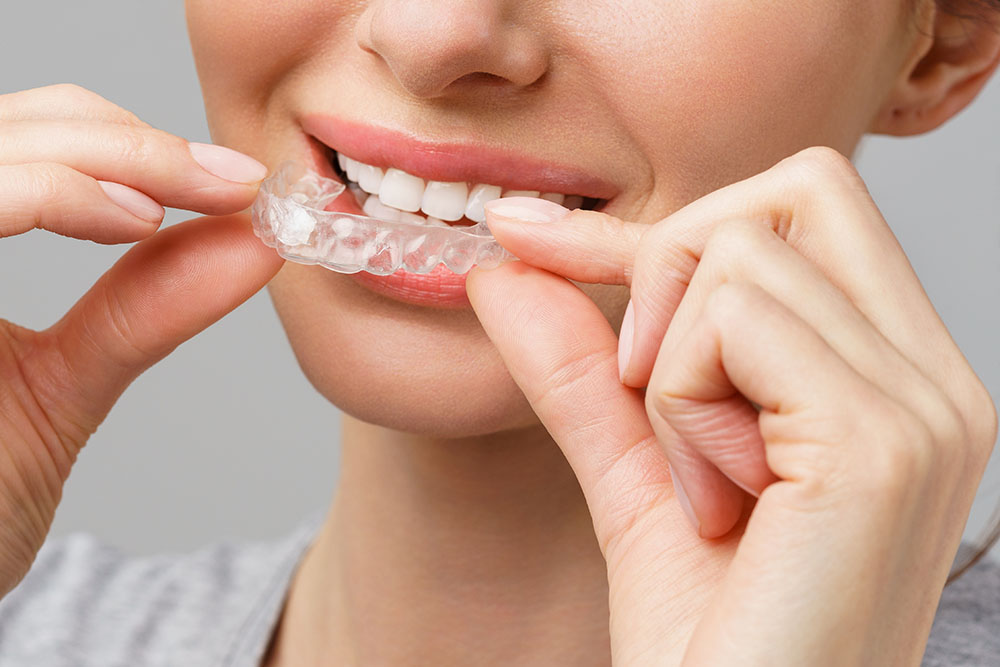
A close-up of a patient wearing a clear plastic aligner over their teeth to demonstrate Invisalign treatment at GWH Dental.

How Does Teeth Whitening Work?

To help reverse the effects of teeth discolouration, GWH Dental professionals use teeth-whitening techniques that involve a bleaching procedure to lighten, whiten and brighten stained tooth enamel.

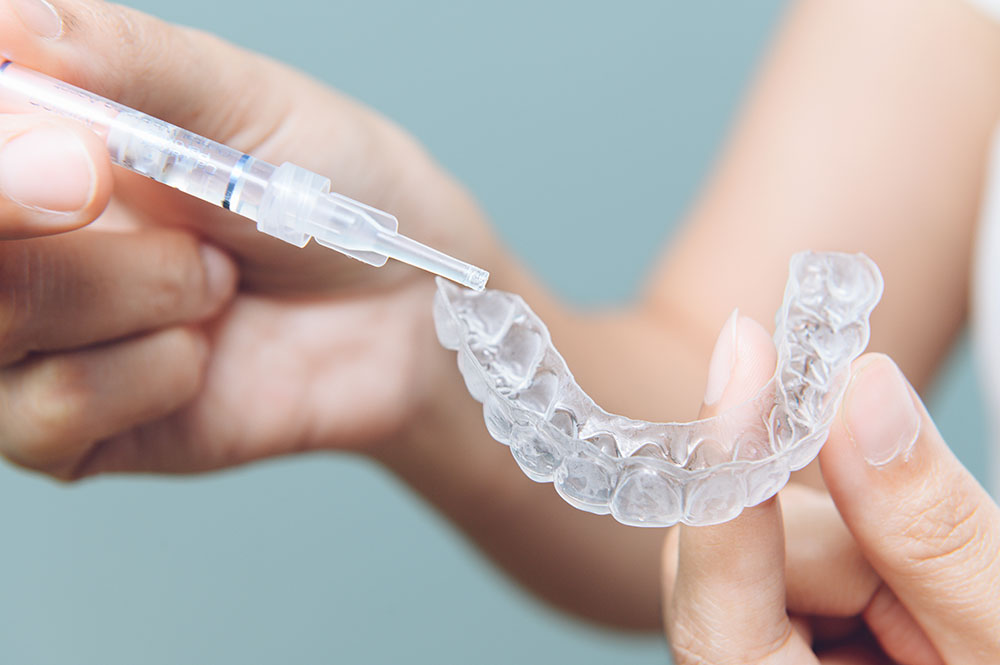
GHW Dental  offers an at-home teeth-whitening treatment.

The patient is given a whitening solution to use at home. They run the solution along the trays and wear them for an hour a day. This treatment takes two weeks.

Under the supervision of a dental professional, such as the team at GWH Dental, clinical studies show whitening is safe for your teeth, gums and mouth.

Your teeth and smile are often the first thing people see and whitening is one way to refresh your look.

What Causes Tooth Discolouration?

Tooth discolouration is extremely common and affects people of all ages. Most causes are gradual — the kind of change you don’t notice day-to-day until you look back at an older photo and see the difference.

There are two types of staining: extrinsic (surface staining on the outer enamel) and intrinsic (deeper discolouration within the tooth itself). Professional whitening works primarily on extrinsic staining, which covers the majority of cases.

Food and drink are the most common culprits. Coffee, tea, red wine, and dark-coloured soft drinks all contain pigment compounds called chromogens that bind to tooth enamel over time. Even some healthy foods — berries, tomato-based sauces, soy sauce — can contribute to surface staining with repeated exposure.

Smoking and tobacco use cause some of the most stubborn staining. Nicotine and tar penetrate enamel and produce a yellow-to-brown discolouration that deepens the longer the habit continues.

Age plays a significant role. As we get older, the outer layer of enamel gradually thins through normal wear, revealing more of the yellowish dentine beneath. This type of discolouration isn’t surface staining — it’s a structural change — which is why older patients sometimes find whitening takes a little longer to achieve their desired result.

Certain medications can affect tooth colour, particularly tetracycline antibiotics taken during childhood when teeth are still developing, as well as some antihistamines, antihypertensives, and antipsychotic medications. Fluorosis — caused by excess fluoride exposure during tooth development — can also produce white spots or brown streaking.

Trauma to a tooth can cause it to darken over time as the pulp inside responds to damage. A tooth that has been knocked or cracked may gradually turn grey or brown, even years after the original injury.

Poor oral hygiene allows plaque and tartar to accumulate on the tooth surface, which not only causes staining but also makes existing discolouration harder to remove.

The good news is that the most common causes — food, drink, smoking, and age-related surface staining — respond well to professional whitening. If you’re unsure whether your discolouration is likely to respond to treatment, our team at GWH Dental can assess this at a consultation before you commit to anything.

Why Choose GWH as Your Trusted Dentist in the Redlands Area?

Convenient Cleveland location serving

and surrounding areas...

Over 50 years serving the Redlands community GWH Dental has been caring for families in Cleveland and across the Redlands for more than half a century.

Accredited to the highest safety standards GWH Dental holds full accreditation with the National Safety and Quality Health Service (NSQHS) Standards. It means every system, process, and procedure in our practice has been independently assessed and meets the national benchmark for quality and patient safety.

An experienced team you’ll see every time Our team of dentists  including Dr Michael Harris, Dr Valentina, Dr Alex Belonogoff, Dr Charlie Sung, and hygienist Michelle Burnett brings a broad depth of clinical expertise under one roof.

Schedule Your Visit

Take control of your dental health!
Schedule a visit today and experience
the expert care you deserve.

Frequently Asked Questions

Tooth whitening is a cosmetic dental procedure that involves lightening the color of natural teeth to achieve a brighter and whiter smile.
Tooth whitening typically uses bleaching agents, such as hydrogen peroxide or carbamide peroxide, to break down stains on the tooth’s surface. This process lightens the tooth’s color and removes discoloration.
Yes, tooth whitening, when performed by dental professionals or using dentist-approved products, is considered safe. However, overusing or using non-recommended products can cause tooth sensitivity and other issues.
Yes, there are over-the-counter tooth whitening products available for home use, such as whitening toothpaste, strips, and gels. However, professional teeth whitening performed by a dentist typically provides more effective and long-lasting results.
The longevity of tooth whitening results varies based on individual habits and maintenance. With proper oral care and avoiding staining substances like tobacco and dark-coloured beverages, the effects can last from several months to a few years.
Tooth whitening is most effective on extrinsic stains caused by external factors like coffee, tea, or tobacco. Intrinsic stains, which occur within the tooth, may be more challenging to lighten and might require alternative cosmetic solutions.
While tooth whitening is generally safe, it may not be suitable for individuals with certain dental conditions, such as tooth decay, gum disease, or hypersensitivity. A dental evaluation is necessary to determine candidacy.
Some individuals may experience temporary tooth sensitivity after tooth whitening, especially with stronger bleaching agents. Dentists often use desensitising agents and recommend toothpaste designed for sensitive teeth to mitigate discomfort.
Tooth whitening is typically not recommended for children and teenagers as their teeth are still developing. It’s best to wait until adulthood before considering teeth whitening treatments.


Our Services

Latest Blogs and News